Best Time for Wildlife in
Ningaloo Reef
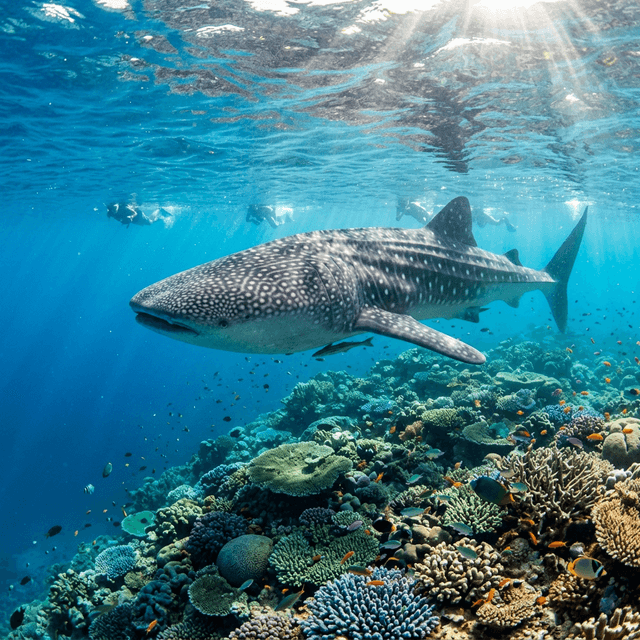
Ningaloo Reef scores 94/100 on the Wildlife Encounter Index in Sep, driven by Whale Shark sightings.
Best window for wildlife: Apr–May · Sep–Oct. ParksCore composite score: 84/100.
Whale shark season, humpback migration, and resident reef life overlap on one fringing reef.
Country
AustraliaRegion
Western Australia
Total Area
604,500 ha
Status
World Heritage Site / Marine Park
Primary Focus
Marine Megafauna
Peak month
Sep
Best Season
Apr–May · Sep–Oct
Sources
Sources not yet checked against our source standard
When is the best time to visit Ningaloo Reef for wildlife?
The best time to visit Ningaloo Reef is Apr–May · Sep–Oct — peak WEI score 94/100 in Sep.
Ningaloo Reef is Western Australia's near-shore megafauna corridor: a fringing reef where coral spawning draws whale sharks in autumn, humpback whales fill the Exmouth Gulf in winter and spring, and manta rays, turtles, reef sharks, and occasional dugongs keep the calendar active between those headline migrations. April through October carries the strongest combined wildlife value, with September standing out for humpback peaks plus resident reef life after whale-shark season fades. Sector choice — Exmouth versus Coral Bay launches, Tantabiddi swim corridors, gulf whale watches — matters as much as month. Scores describe probability, not promises; licensed operators and sea state gate every boat day. See our Great Barrier Reef page for the larger Pacific reef benchmark.
Oct Score
peak Rating
Probability Breakdown
Deep Context
“October holds strong humpback numbers with warming water and thinning tour crowds. Turtle nesting builds on beaches south of Exmouth — combine gulf whale watches with guided night walks where permitted. Reef snorkelling stays excellent when northerly winds stay light.”
Monthly Viewing Probabilities
Wildlife sighting probabilities in Ningaloo Reef. Select a month to see the expected encounter rates.
Monthly sighting probabilities for each species from our calibrated seasonal model.
Lower density on shallow lagoon edges and sand channels than peak months — target known resident sectors.
Global Rankings arrow_forward
October warming shallows draw turtles and dugongs — binocular scans from Yardie Creek mouth.
Global Rankings arrow_forward
Species use mainland nesting beaches and inshore seagrass year-round; this month needs more drive time than peak season.
Global Rankings arrow_forward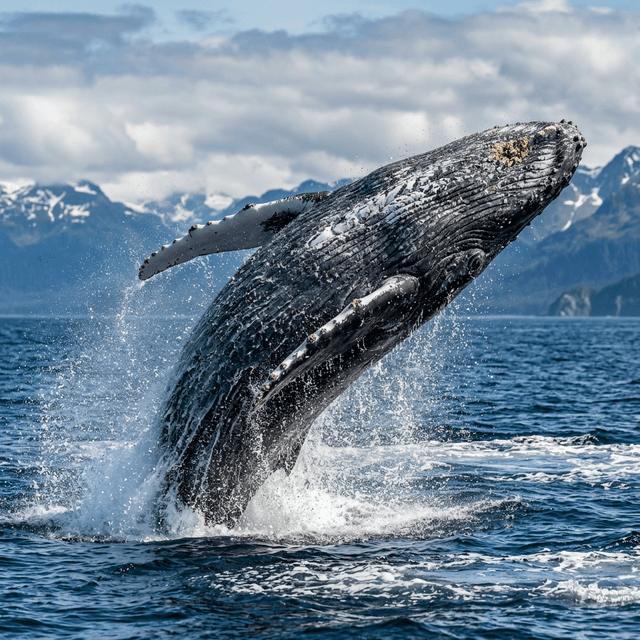
October holds strong humpback numbers before the migration thins — excellent shoulder pricing.
Global Rankings arrow_forward
Plan conservatively on southern nesting beaches and gulf shallows; resident species carry the itinerary.
Global Rankings arrow_forward
Solid month on fringing-reef cleaning stations and drift corridors — standard circuits cover the productive sectors.
Global Rankings arrow_forward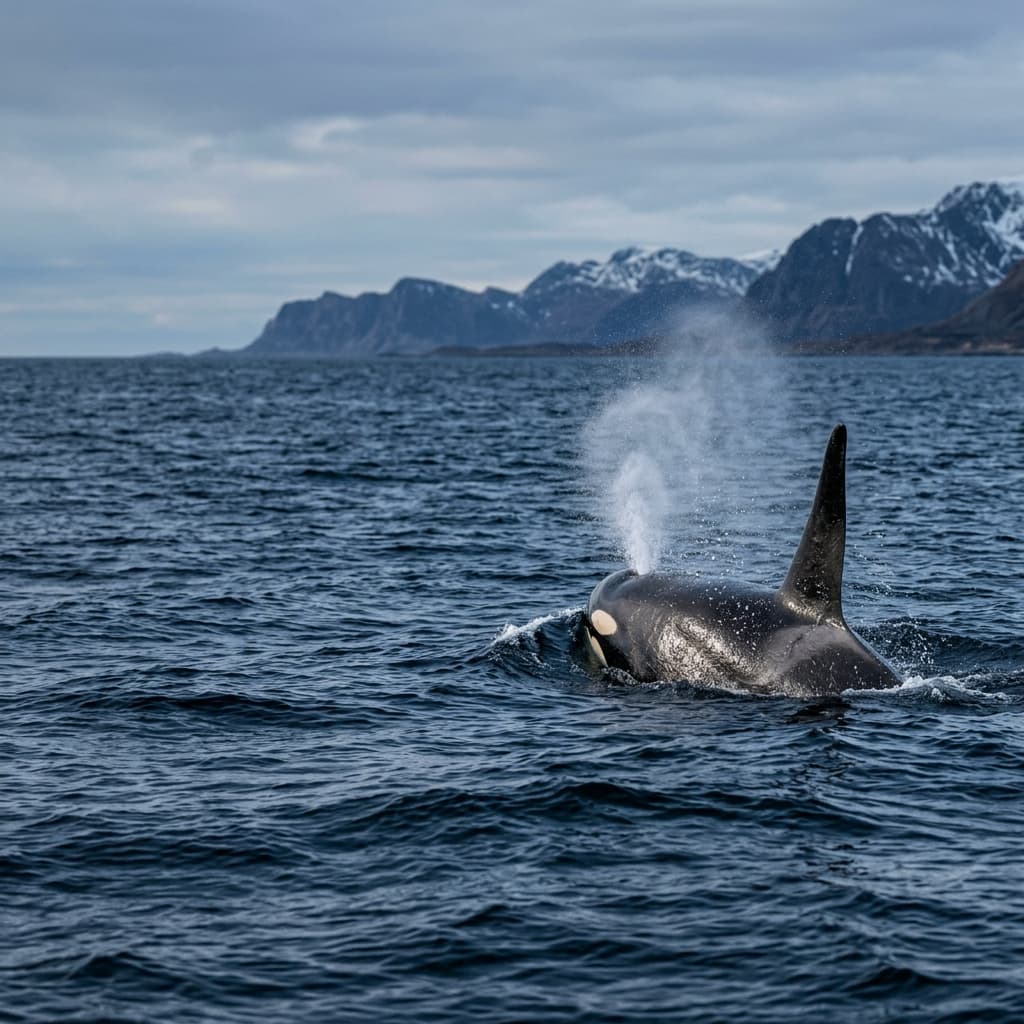
Shoulder timing on outer-reef transits and gulf mouth — resident species anchor drives more than migration targets.
Global Rankings arrow_forward
Normal guide effort on reef ledges and crest bommies matches the month's score band.
Global Rankings arrow_forward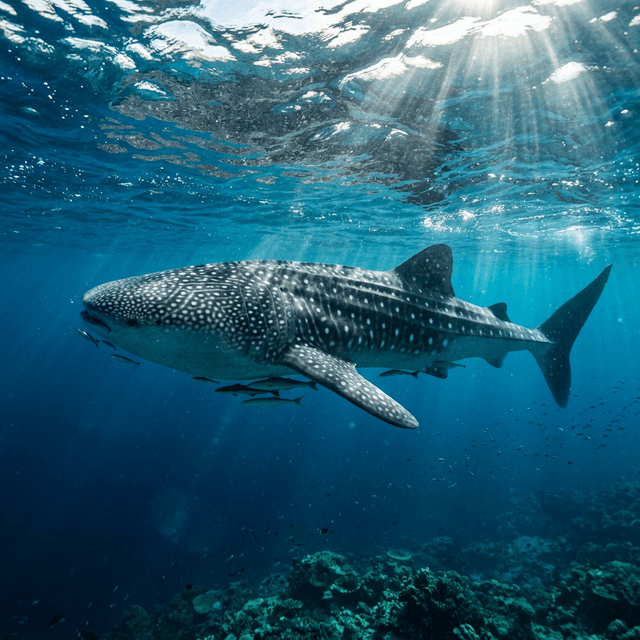
Not a planning month for this species on typical northern itineraries.
Global Rankings arrow_forwardData: WEI v6 — calibrated seasonal model · How we score
What are similar destinations to Ningaloo Reef?
What animals can you see in Ningaloo Reef?
Habitat Species
orca
starOrca pass through Ningaloo waters irregularly — no predictable season like humpbacks or whale sharks. Scores stay modest year-round; boat crews may report opportunistic sightings on outer-reef transits.
dugong
starDugongs graze Exmouth Gulf seagrass meadows but are low-detectability — brief surface rolls at distance are typical. Do not headline itineraries around dugongs; treat any encounter as a bonus on calm gulf crossings.
manta ray
starReef manta rays use cleaning stations and drift corridors year-round along the fringing reef — a reliable baseline species when headline migrations are absent. Dawn snorkels and drift dives beat midday chop.
whale shark
starWhale sharks aggregate along Ningaloo after coral spawning — a seasonal filter-feeder pulse, not a year-round resident. Licensed swim tours depart from Exmouth and Coral Bay March through July with April–May often strongest; operator rules and sea state gate every departure.
humpback whale
starHumpback whales migrate through the Exmouth Gulf and along the reef edge July through October — a distinct window from whale-shark season. Boat-based whale watching and occasional snorkel encounters depend on operator permits and calf-protection rules.
green sea turtle
starGreen turtles nest on Ningaloo mainland beaches November through February and forage on seagrass patches year-round. Night nesting walks require licensed guides; daytime snorkel encounters stay probable on calm inshore reefs.
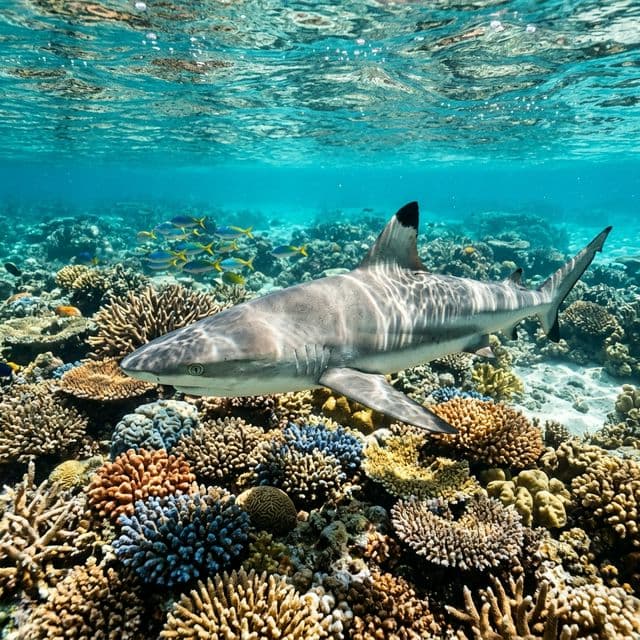
Blacktip reef sharks patrol shallow lagoon edges year-round — common on Coral Bay and Bundegi snorkel circuits. Smaller and more skittish than whitetips; calm water improves approach odds.
Whitetip reef sharks rest under ledges by day and patrol reef crests at dusk — among the most reliable year-round species on snorkel drifts. Present across the fringing reef, not a single hotspot.
Loggerheads nest on the same coastal strip with a slightly earlier peak than greens — present year-round in foraging mode but nesting lifts the summer signal. Avoid disturbing crawl tracks on beaches.
Why visit Ningaloo Reef
for a safari?
Whale shark season, humpback migration, and resident reef life overlap on one fringing reef. Compare monthly WEI scores, species rankings, and marine timing for Ningaloo Reef, Western Australia — whale sharks, humpbacks, manta rays, and fringing-reef wildlife.